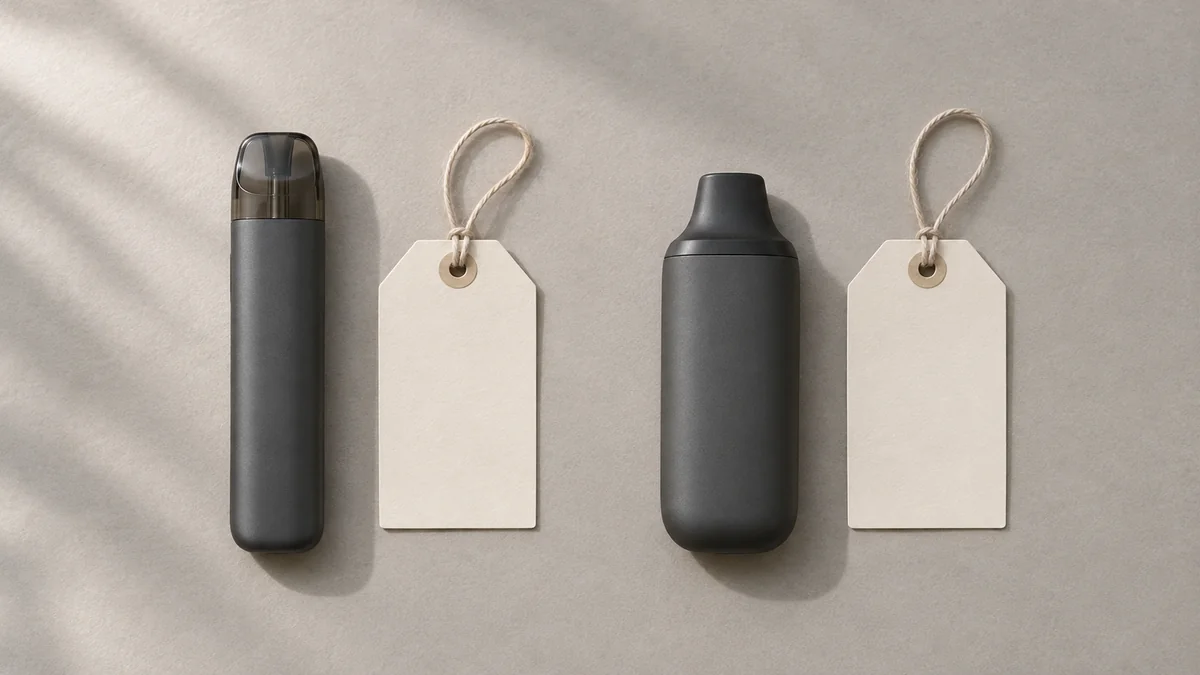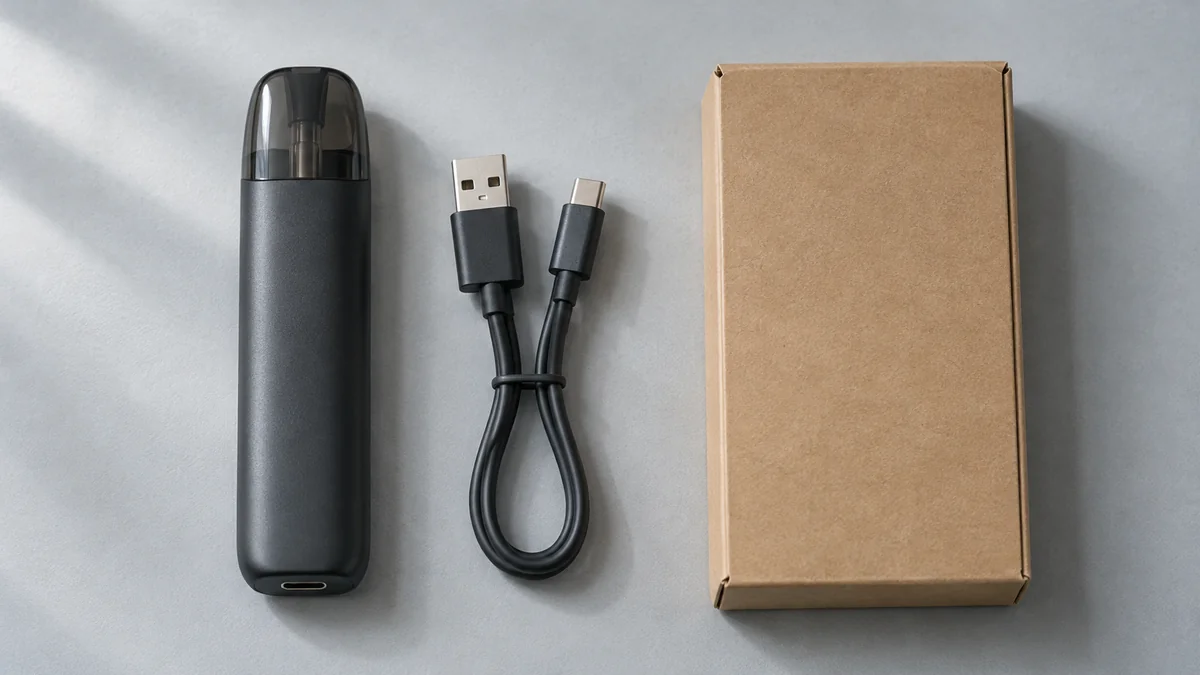
Yes—adults aged 21 or older can still buy vapes in Texas, but the products available for lawful sale are tightly restricted. Texas did not impose a blanket ban on vaping products. However, federal law limits lawful U.S. sales to tobacco products that have the required FDA marketing authorization, while Texas laws effective September 1, 2025 prohibit the marketing, advertising, offering for sale, or sale of several categories of e-cigarette products.
For wholesalers, distributors, and importers, this means that age eligibility is only the first check. A commercially viable Texas SKU also needs a defensible federal authorization status, compliant origin and manufacturing records, acceptable ingredients and packaging, and a distribution plan that accounts for state advertising rules.
This article is a business compliance overview, not legal advice. Rules and enforcement positions can change, so confirm each SKU and transaction with current official sources and qualified counsel.
Can you still buy vapes in Texas in 2026?
Yes, but only within a narrower legal market. At the federal level, retailers may sell tobacco products only to people aged 21 or older. FDA guidance also requires retailers to check photo identification for purchasers under age 30. The FDA states that e-cigarettes with marketing authorization are the only e-cigarettes that may lawfully be sold in the United States.
Texas adds another layer. Senate Bills 2024, 1313, and 1316 took effect on September 1, 2025, and the Texas Comptroller states that enforcement began that day with no grace period. These laws restrict certain product characteristics, ingredients, manufacturing origins, packaging designs, and advertising practices. A product that clears one layer does not automatically clear the other.
What changed under Texas SB 2024?
SB 2024 expanded the conduct and product categories covered by Texas Health and Safety Code Section 161.0876. According to the Texas Comptroller, a person may not market, advertise, sell, offer for sale, or cause to be sold an e-cigarette product if it falls into a prohibited category.
| Texas restriction | Practical B2B implication |
|---|---|
| Container includes a celebrity name or prohibited youth-oriented imagery | Review every face of the original consumer packaging before ordering inventory. |
| Product is shaped like or disguised as another item | Novelty designs that resemble everyday objects require heightened scrutiny. |
| E-cigarette product is wholly or partly manufactured in China or another U.S.-designated foreign adversary | Collect records for blending, filling, packaging, and country-of-origin statements; hardware origin alone does not answer every question. |
| Product contains or is mixed with cannabinoids, alcohol, kratom, kava, mushrooms, tianeptine, or derivatives | Use a SKU-level formula and ingredient review. Do not rely only on the product name. |
| Marketing claims that the product contains a prohibited mixture | Audit listings, catalogues, labels, and distributor copy as well as the physical product. |
The Comptroller’s current FAQ explains that “manufacturing” includes blending or processing the e-cigarette product, inserting or pouring it into a device or container, and wrapping or packaging the pre-filled device or container. It also explains how country-of-origin labels can create a presumption about where the e-cigarette product was manufactured. Importers should therefore obtain clear, product-specific records instead of relying on a general supplier declaration.
Federal authorization still controls U.S. market access
Texas compliance does not replace federal compliance. The FDA regulates the manufacture, import, packaging, labeling, advertising, promotion, sale, and distribution of electronic nicotine delivery systems (ENDS). New tobacco products generally require premarket authorization before they may be marketed in the United States.
The FDA’s current authorized e-cigarette list and Searchable Tobacco Products Database should be the starting point for a product-level check. An FDA marketing granted order does not mean a product is safe or “FDA approved.” It means the agency has authorized that specific product to be marketed under the applicable order and conditions.
For an importer, the commercial file should connect the exact product name, manufacturer, model or SKU, packaging, and authorization record. Similar branding, a related device, or a supplier’s statement that an application was filed is not a substitute for matching the exact product to an authorization.
For a broader U.S. sourcing overview, see our disposable vape USA compliance and importer checklist and U.S. vape starter kits guide.
Who can buy vapes in Texas?
Federal law prohibits the sale of tobacco products, including e-cigarettes, to anyone under 21. Retailers must check photo ID for purchasers under 30 under current FDA retail guidance. Businesses selling online also need procedures that address age verification and shipping requirements rather than treating a date-of-birth checkbox as a complete compliance system.
Wholesale transactions do not remove the need for product legality. Distributors should qualify downstream accounts, maintain traceable invoices, and define contractual controls for where products may be marketed and sold.
Can Texas warehouses store products for sale outside Texas?
The Texas Comptroller says SB 2024 does not prohibit storage. Products may be stored in a Texas warehouse or third-party logistics facility for picking, packing, and shipping to destinations outside Texas if ownership does not change while the products are in Texas.
The Comptroller also states that online marketing or offers directed to other states are not prohibited merely because the company, servers, or fulfillment center is located in Texas. That does not eliminate obligations in destination states. A distributor using this model should maintain geo-restrictions, shipping controls, ownership records, and destination-specific SKU rules.
Packaging and advertising checks for Texas
Texas rules reach beyond the liquid formula. Current official guidance identifies restrictions involving cartoon-like characters aimed at minors, designs that imitate products marketed to minors, certain symbols, celebrity images or names, and images resembling food products such as candy or juice. The Comptroller also says that changing noncompliant original packaging does not make the product saleable.
SB 1316 separately restricts outdoor e-cigarette advertising within 1,000 feet of a church or school. That makes retail location data and sign placement part of distributor account onboarding. Marketing files should also be reviewed for consistency across cartons, point-of-sale displays, online listings, catalogues, and social assets.
A wholesale compliance checklist before supplying Texas
- Match the exact SKU to federal authorization. Check the FDA’s authorized product resources and retain the supporting record.
- Map the manufacturing chain. Document where liquid was blended, filled, sealed, wrapped, and packaged, along with hardware and component origins.
- Review ingredients and claims. Confirm that neither the formula nor the marketing describes prohibited mixtures.
- Audit original packaging. Check names, imagery, device shape, trademarks, food resemblance, and youth-oriented visual cues.
- Verify age-control procedures. Review retail and online age verification, staff training, and recordkeeping.
- Segment inventory by destination. Prevent a product approved for one market or state from being offered automatically in Texas.
- Control advertising placement. Screen outdoor advertising locations and keep approved creative files.
- Monitor official updates. Laws, designated foreign-adversary lists, FDA authorizations, and enforcement priorities can change.
Texas versus the European Union: do not reuse one compliance file
A product prepared for the EU is not automatically eligible for Texas or the wider U.S. market. Under Article 20 of the EU Tobacco Products Directive, manufacturers and importers must notify covered e-cigarettes and refill containers before placing them on a member-state market. The Directive also sets requirements that include a maximum nicotine concentration of 20 mg/ml, a 10 ml maximum for nicotine refill containers, a 2 ml maximum for cartridges or tanks, and child-resistant and tamper-evident design requirements.
The U.S. model centers on FDA product authorization and federal tobacco controls, followed by state and local restrictions. The EU model uses the TPD framework plus national implementation. B2B buyers serving both regions should maintain separate market versions, technical files, labeling, notifications or authorizations, and change-control records.
Questions importers should ask a prospective supplier
- What is the exact FDA authorization status for each U.S. SKU, and can it be matched to an official record?
- Where were the liquid, filling, sealing, and final packaging operations performed?
- Can the supplier provide batch-level traceability and consistent country-of-origin documentation?
- Does the original package contain any restricted imagery, celebrity reference, food resemblance, or novelty design?
- Does the formula contain any substance restricted by Texas SB 2024?
- How are U.S. and EU variants separated in production, labels, packaging, and shipping?
- What is the documented process for regulatory changes and SKU holds?
PInvape buyers can review our verified product categories for an initial technical discussion. Market access must still be confirmed for each destination and each specific SKU. For documentation, OEM/ODM, or market-version questions, contact the PInvape team with the destination country, product format, and intended distribution channel.
FAQ
Are vapes completely banned in Texas?
No. Texas has not imposed a blanket ban on all vaping products. Adults aged 21 or older may still buy products that satisfy federal requirements and do not fall into Texas’s prohibited categories.
Can you buy disposable vapes in Texas?
Some products may be available, but “disposable” is not enough to determine legality. Buyers and sellers must check the exact product’s FDA authorization, manufacturing and packaging origin, ingredients, design, and labeling against current federal and Texas requirements.
Can you buy vapes online in Texas?
Online sales are not categorically banned, but sellers must comply with federal, state, shipping, age-verification, and product-specific requirements. A website listing does not prove that a product is lawful for delivery to a Texas customer.
Do Texas vape laws apply to nicotine-free products?
Texas’s definition addressed by SB 2024 covers consumable liquid or other material aerosolized or vaporized during e-cigarette use regardless of whether it contains nicotine. Product-specific legal review is therefore necessary even when a seller describes an item as nicotine-free.
Can a Texas warehouse fulfill vape orders to other states?
The Texas Comptroller says storage and fulfillment to destinations outside Texas may be permissible when ownership does not change while the product is in Texas. The destination state’s rules and federal requirements still apply.
Is an EU TPD-compliant vape legal to sell in Texas?
Not automatically. EU TPD compliance does not replace FDA marketing authorization or Texas-specific product, origin, packaging, ingredient, and advertising requirements.