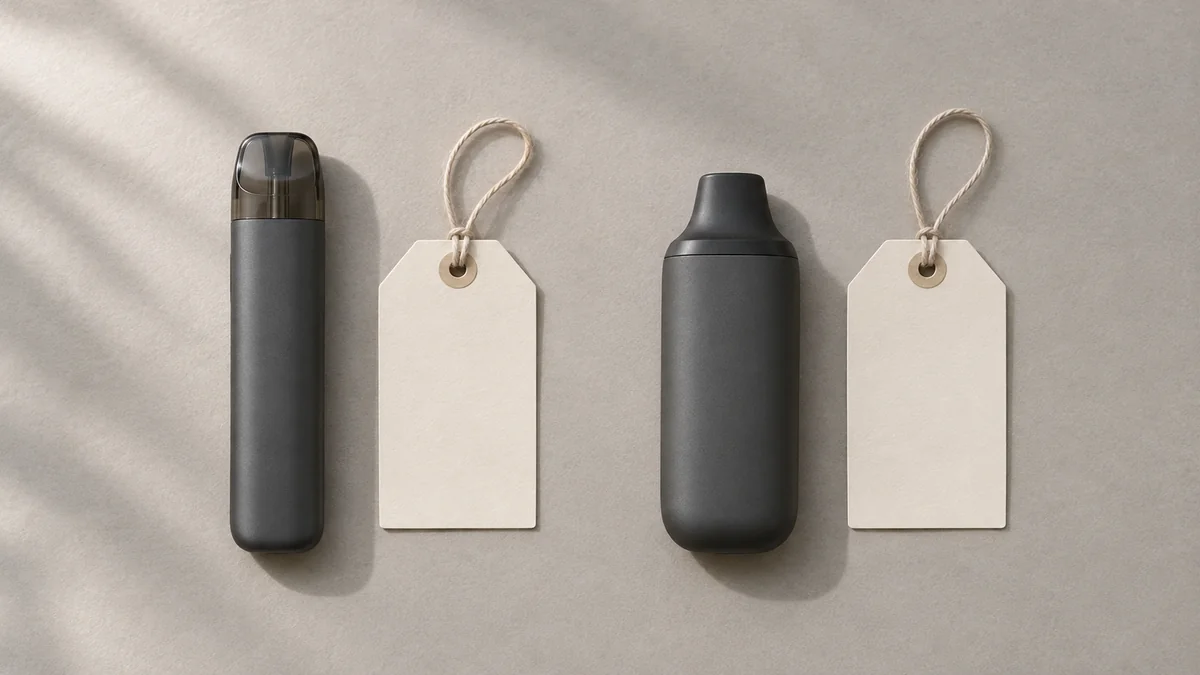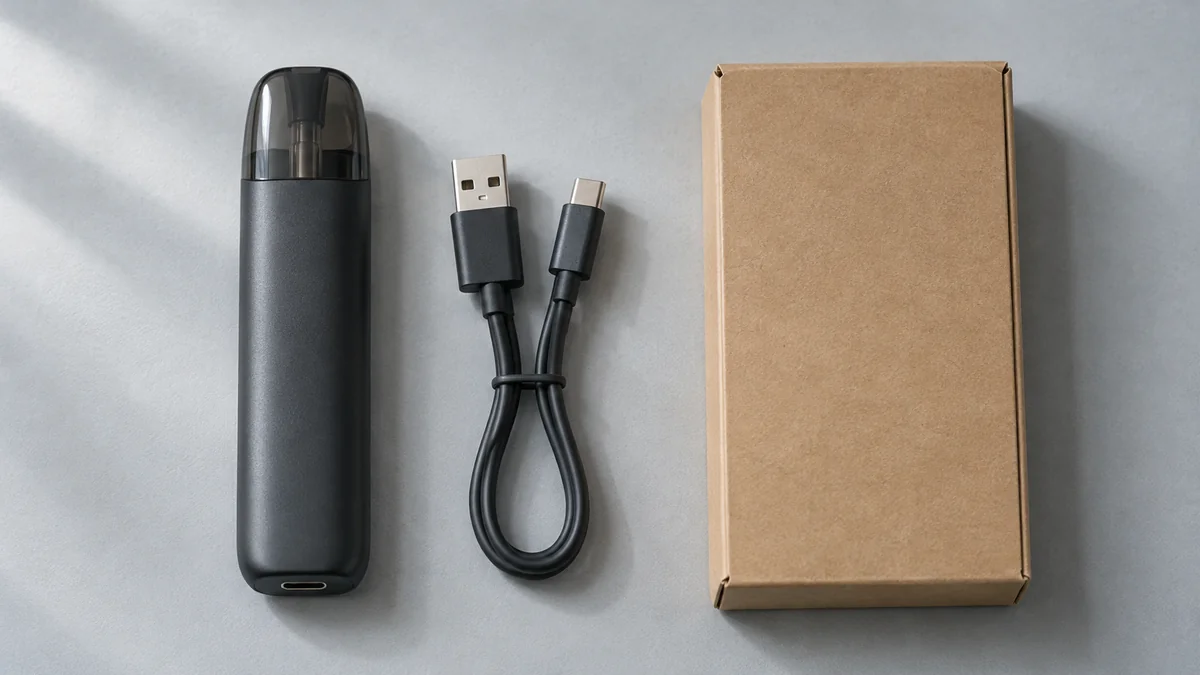
A cheap disposable vape is only commercially cheap when its landed cost, sell-through, defect exposure, and compliance risk all remain controlled. For wholesalers and importers, the lowest factory quote can become the most expensive option if the product cannot legally enter the destination market, arrives with poor documentation, produces high return rates, or becomes unsaleable after a regulatory change.
This guide explains how B2B buyers can compare affordable disposable vape offers for the United States and Europe without treating unit price as the only purchasing criterion. It does not recommend any product for consumer use, and it does not establish that a listed or sampled product is lawful in a particular market.
What buyers mean by “cheap disposable vape”
Search results for this phrase are dominated by retail discount pages, wholesale catalogues, and bulk price tables. These pages usually satisfy immediate price-shopping intent, but they rarely show the complete cost of importation, compliance, inventory ageing, and after-sales claims.
For a distributor, “cheap” should mean a competitive cost per saleable, compliant unit. That figure starts with the quoted price and adds packaging, freight, duties, broker fees, testing and documentation, warehousing, damage allowance, returns, marketing restrictions, and unsold inventory risk.
Build a landed-cost model before comparing quotations
| Cost component | Buyer question |
|---|---|
| Product price | Is the quotation per device, inner pack, or master carton, and which Incoterm applies? |
| Freight and insurance | Does the route accept devices containing lithium batteries and e-liquid? |
| Import charges | Which tariff classification, duties, taxes, broker fees, and inspections apply? |
| Compliance file | Are product notifications, authorizations, labels, warnings, and technical records complete? |
| Quality loss | What allowance covers leakage, charging faults, damaged packaging, and dead-on-arrival units? |
| Inventory risk | Could a destination ban, flavor rule, authorization issue, or slow sell-through strand the stock? |
A useful comparison normalizes every offer to the same delivery point, payment terms, carton quantity, quality assumptions, and destination-market version. A low minimum order may reduce cash exposure even when its per-unit price is slightly higher.
U.S. compliance can outweigh the quoted price
The U.S. Food and Drug Administration regulates electronic nicotine delivery systems (ENDS), including their manufacture, import, packaging, labeling, advertising, promotion, sale, and distribution. The FDA states that e-cigarettes with marketing authorization are the only e-cigarettes that may lawfully be sold in the United States.
For importers, the exact product—not merely a similar brand name or device format—must be matched to an applicable authorization record. A pending application, supplier assurance, or online retail listing does not establish lawful market status. FDA also verifies market authorization and labeling when tobacco products are imported, and unauthorized products may be detained or refused.
Before placing a U.S. order, use the disposable vape USA compliance checklist to structure product-level due diligence. State and local rules must then be checked separately.
Europe is not one disposable-vape market
Article 20 of the EU Tobacco Products Directive requires covered e-cigarettes and refill containers to comply with the Directive and requires manufacturers or importers to notify products before placing them on a member-state market. For nicotine-containing products, the Directive includes a 20 mg/ml nicotine ceiling, a 2 ml maximum for disposable electronic cigarettes, cartridges, or tanks, and requirements for child-resistant, tamper-evident, leak-protected designs and prescribed consumer information.
That EU framework does not guarantee access to every national market. European Commission materials document national prohibitions on disposable electronic cigarettes in several member states. Buyers must therefore verify the current law in each destination country, including product bans, flavor rules, environmental obligations, registration, tax, and producer-responsibility requirements.
Quality checks that protect a value-priced range
- Approved sample: seal a reference sample and specification before mass production.
- Batch traceability: connect raw materials, filling, assembly, testing, and carton codes to each production lot.
- Leak and transport testing: define acceptance criteria for pressure, temperature, vibration, and storage orientation.
- Battery controls: review cell specifications, protection design, transport documentation, and storage conditions.
- Output consistency: assess draw activation, aerosol delivery, charging behavior where applicable, and end-of-life function.
- Packaging inspection: verify warnings, ingredients, nicotine declaration, importer details, batch data, and destination language.
- Defect agreement: define inspection method, acceptable quality limits, claim evidence, replacement terms, and credit timing.
How to compare supplier quotations
Request a quotation sheet that separates device price, packaging customization, testing, tooling, documentation, freight, and optional services. Ask the supplier to identify which statements are supported by third-party reports and which are internal declarations.
Do not accept broad claims such as “FDA registered,” “TPD approved,” or “EU compliant” without product-specific evidence. FDA establishment registration is not the same as product marketing authorization. EU notification also does not override a national ban or prove that every version, label, and package is compliant.
When a pod system may offer better wholesale economics
Disposable devices can be simple to merchandise, but they concentrate the battery, liquid, and enclosure in one unit. A replaceable-pod format can shift repeat purchases toward pods while retaining the device, depending on the product and market. Compare the total customer acquisition, repeat-purchase pattern, shelf space, recycling obligations, and regulatory outlook.
Our pod system vape guide and refillable pod kit guide explain the operational differences for trade buyers.
Wholesale buyer checklist
- Define destination country, state, sales channel, and customer type.
- Verify product-level authorization or notification requirements.
- Confirm whether disposable products are permitted in the destination.
- Compare landed cost rather than factory price.
- Review batch records, test reports, labels, packaging, and battery transport documents.
- Inspect production samples against written acceptance criteria.
- Model defects, returns, inventory ageing, and regulatory change.
- Keep destination-specific SKUs separated in ordering and warehousing systems.
For an initial sourcing discussion, review PInvape’s verified disposable vape category. Product availability and market eligibility must be confirmed for the exact destination and SKU. Buyers can contact PInvape with target market, order volume, packaging requirements, and requested documentation.
FAQ
What is the cheapest disposable vape for wholesale?
There is no universal answer. The lowest quoted unit may have a higher landed cost or greater compliance, defect, and inventory risk. Compare offers on a consistent delivered and saleable-unit basis.
Can cheap disposable vapes be legally imported into the United States?
Price has no bearing on legality. The exact product must satisfy applicable FDA marketing authorization, labeling, import, and other federal requirements, plus state and local rules.
Are disposable vapes legal throughout the European Union?
No single answer applies across Europe. The TPD provides an EU framework, while member states can impose additional restrictions or prohibitions. Verify the current destination-country rules before ordering.
Does TPD notification prove that a product is compliant?
Notification is one requirement. Buyers must still verify the exact product version, label, packaging, technical file, national rules, taxes, and environmental obligations.
How can wholesalers reduce risk on a first order?
Use a controlled sample, smaller initial quantity, written specifications, pre-shipment inspection, destination-specific compliance review, and clear defect and credit terms.